Tell us about the job
Takes about a minute. No obligation.
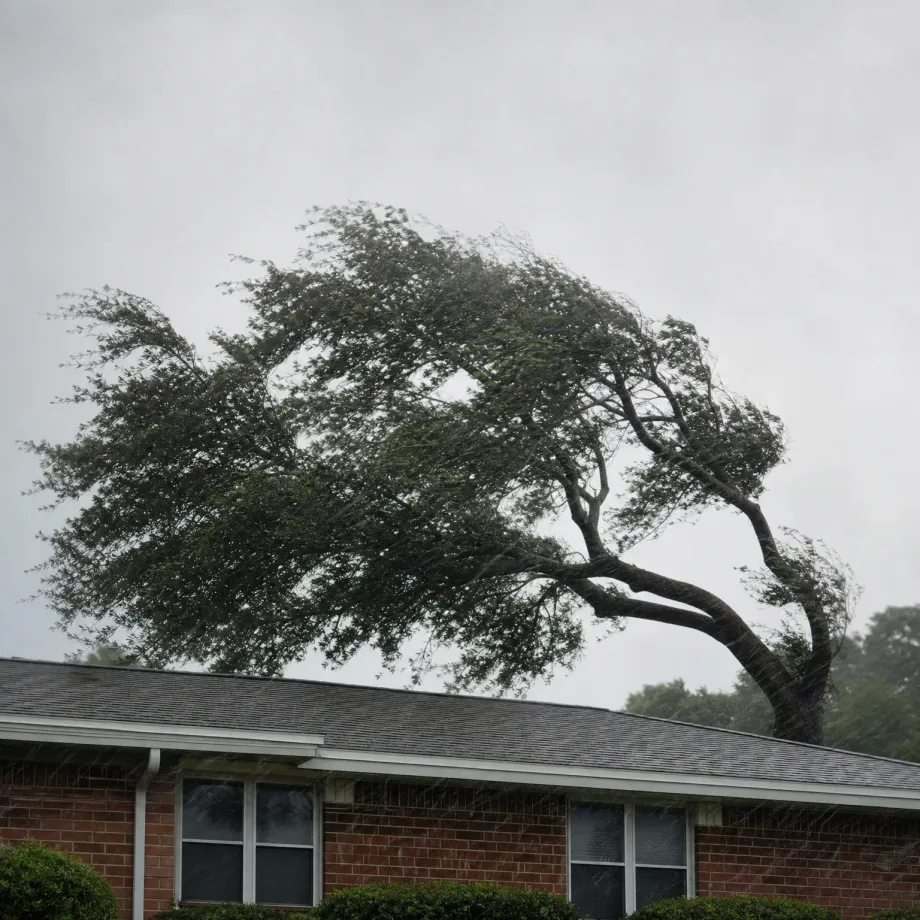
A contractor quoting furnace repair in Mecklenburg County has to work out what actually failed and why before the repair scope makes sense. 178 severe weather events were recorded in Mecklenburg County, North Carolina between 2015 and 2024. At that rate, severe weather is a recurring feature of life here, but furnaces fail for many reasons, and weather load alone rarely explains a cracked heat exchanger or a failed igniter. Age of the equipment and the consistency of past servicing are what a contractor checks first, because those factors account for most of what they find inside a furnace that has stopped working reliably.
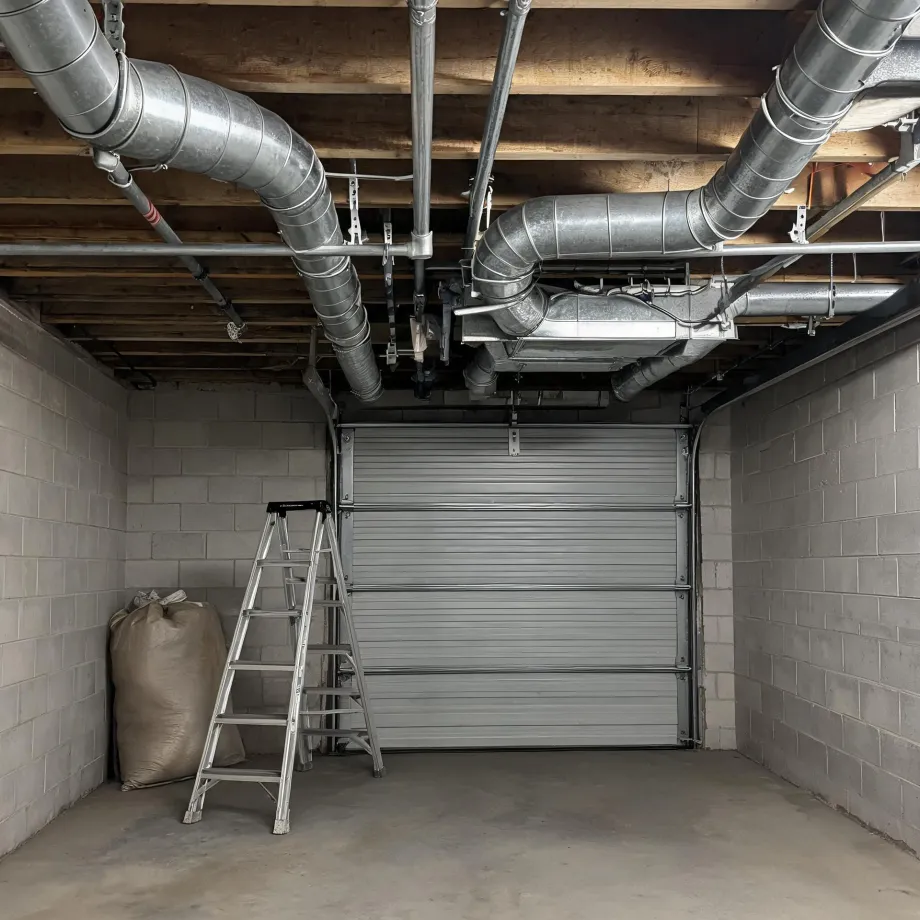
Furnaces that have run since the original build carry wear that shows up the moment a contractor opens the unit: heat exchangers that have cycled through more seasons than most parts are made to handle, and control boards whose replacements may no longer be stocked by any distributor. Half the homes in Mecklenburg County, North Carolina were built in 1997 or earlier (2020-2024 ACS 5-year). That figure matters for repair work because it places a large share of the county's heating equipment in an age range where a contractor pulling a failed component has to verify that the part is still manufactured before a repair scope can be written. When it is not, the job changes shape entirely.
The Parts of a Furnace a Contractor Checks First
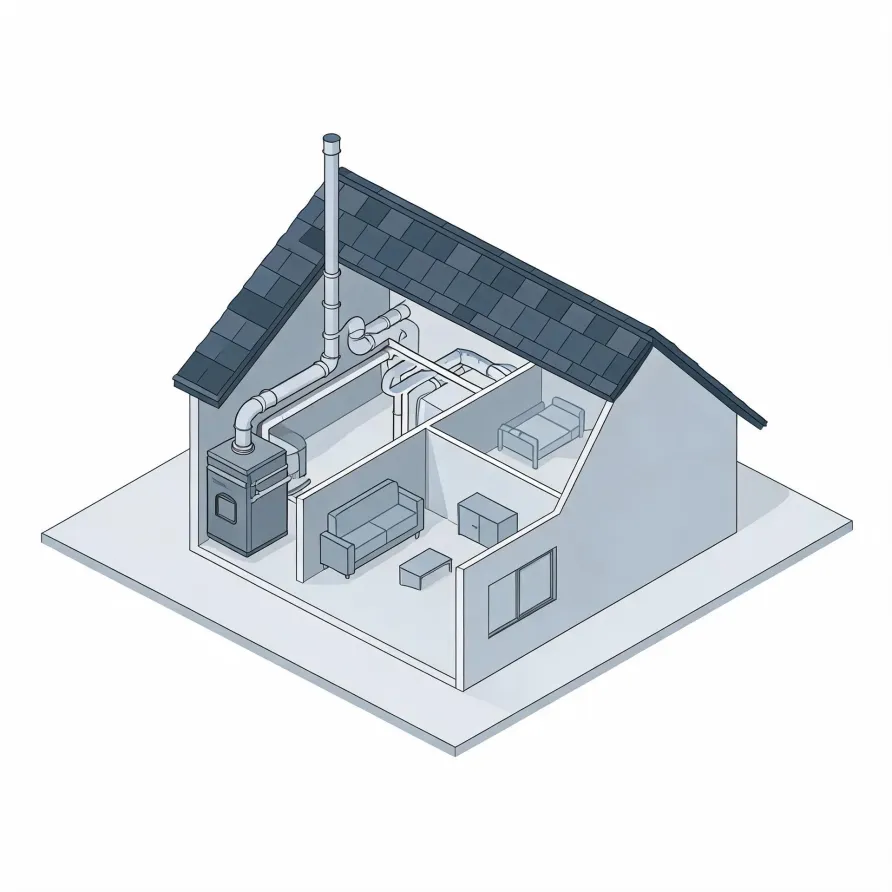
The furnace itself sits in a utility room, basement, or closet and is the piece the contractor goes to first. Inside it, the heat exchanger and burner assembly are where most failures show up. A cracked heat exchanger, a failed ignitor, or a burner that won't light are the reasons a furnace stops producing heat.
The blower motor and its fan wheel push conditioned air out through the supply side of the house. The flue pipe runs from the furnace to an exterior wall or roof and carries combustion gases out. The air filter, sitting at the return air opening, can restrict airflow badly enough to cause the system to shut down on its own.
The drawing shows the general layout of a furnace system, and a licensed contractor determines which components apply to your particular home.
Find a contractor in Mecklenburg CountyMecklenburg County, by the record
178 severe weather events were recorded in Mecklenburg County, North Carolina between 2015 and 2024.
NOAA National Centers for Environmental Information, Storm Events Database, bulk CSV export, events 2015-01-01 through 2024-12-31.Half the homes in Mecklenburg County, North Carolina were built in 1997 or earlier (2020-2024 ACS 5-year).
U.S. Census Bureau, 2020-2024 American Community Survey 5-Year EstimatesMecklenburg County, North Carolina holds 503,071 housing units (2020-2024 ACS 5-year).
U.S. Census Bureau, 2020-2024 American Community Survey 5-Year EstimatesOwners occupy 55.1% of the occupied homes in Mecklenburg County, North Carolina (2020-2024 ACS 5-year).
U.S. Census Bureau, 2020-2024 American Community Survey 5-Year EstimatesCodes & Standards Behind Furnace Repair in Mecklenburg County, North Carolina6 sourced rules & standards
What HVAC Repair Looks Like in Mecklenburg County
Non-weatherized gas furnaces manufactured on or after November 19, 2015 must reach 80.0 percent AFUE.
Non-weatherized oil-fired furnaces manufactured on or after November 19, 2015 must reach 83.0 percent AFUE.
Mobile home gas furnaces manufactured on or after November 19, 2015 must reach 80.0 percent AFUE.
Non-weatherized gas furnaces manufactured on or after December 18, 2028 must reach 95.0 percent AFUE, up from the 80.0 percent minimum that applies to units manufactured before that date.
Licensing Rules for HVAC Repair in Mecklenburg County, North Carolina
North Carolina issues Class I heating licenses covering all systems in all structures, and Class II licenses covering heating systems in single-family detached residential dwellings.
North Carolina requires a license before any person or firm may engage in, or offer to engage in, the business of heating contracting.
Severe Weather Events in Mecklenburg County
Weather puts real load on heating equipment. What rolls through Mecklenburg County shapes how hard furnaces work and how often they fail, which is why local repair demand tracks local conditions.
178 severe weather events, 2015–2024. Source: NOAA National Centers for Environmental Information, Storm Events Database.