Tell us about the job
Takes about a minute. No obligation.
A furnace quoted for a house in Lenoir County has to be sized against what this area actually puts it through. 61 severe weather events were recorded in Lenoir County, North Carolina between 2015 and 2024. At that rate, severe weather is a standing condition here, and a contractor sizing a new furnace factors in the heating load those conditions create rather than defaulting to a manufacturer's standard recommendation for a square footage. The quality of the install matters too: duct sealing, flue routing, and equipment placement all carry more weight in a place where the system will be asked to work hard on a regular basis.
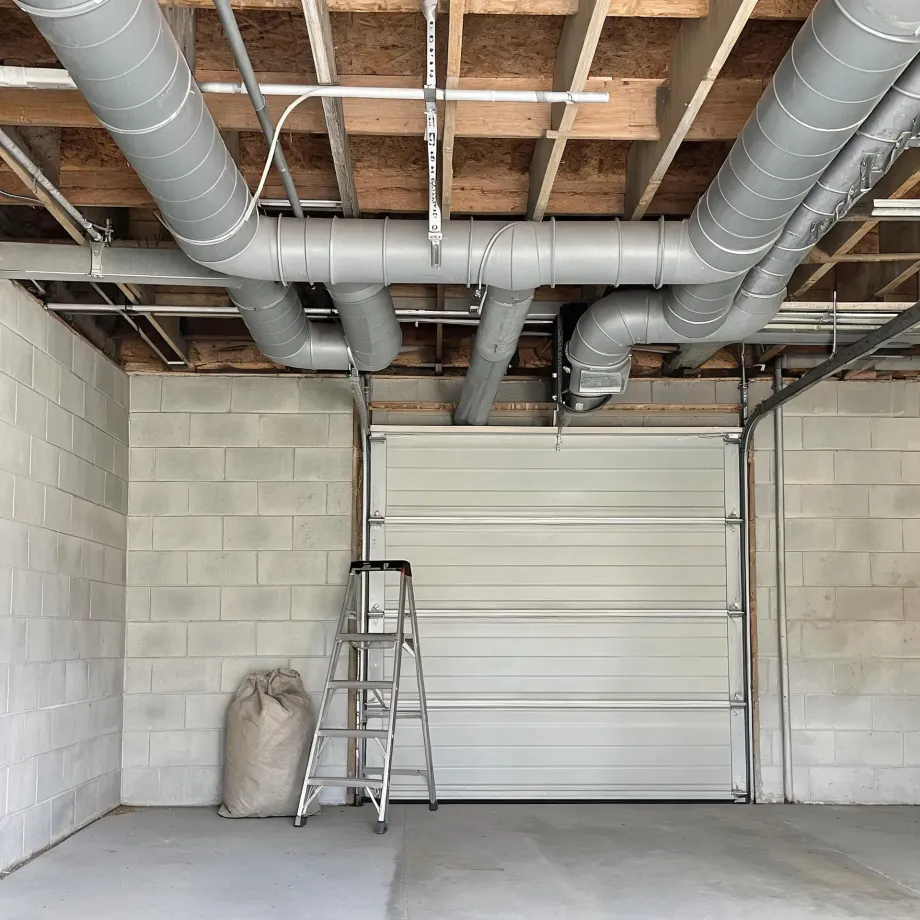
Ductwork laid down for an older heating system carries assumptions about airflow that a new furnace may not match. Half the homes in Lenoir County, North Carolina were built in 1978 or earlier (2020-2024 ACS 5-year). A contractor installing a furnace in a house from that era has to assess what the existing runs can actually deliver before the new unit goes in, because ducts sized for one system do not automatically serve another. The electrical side of the job follows the same logic: panels in houses of that vintage were built to a different load, and what the new equipment draws has to be confirmed against what the house can supply.
What Gets Installed With a New Furnace
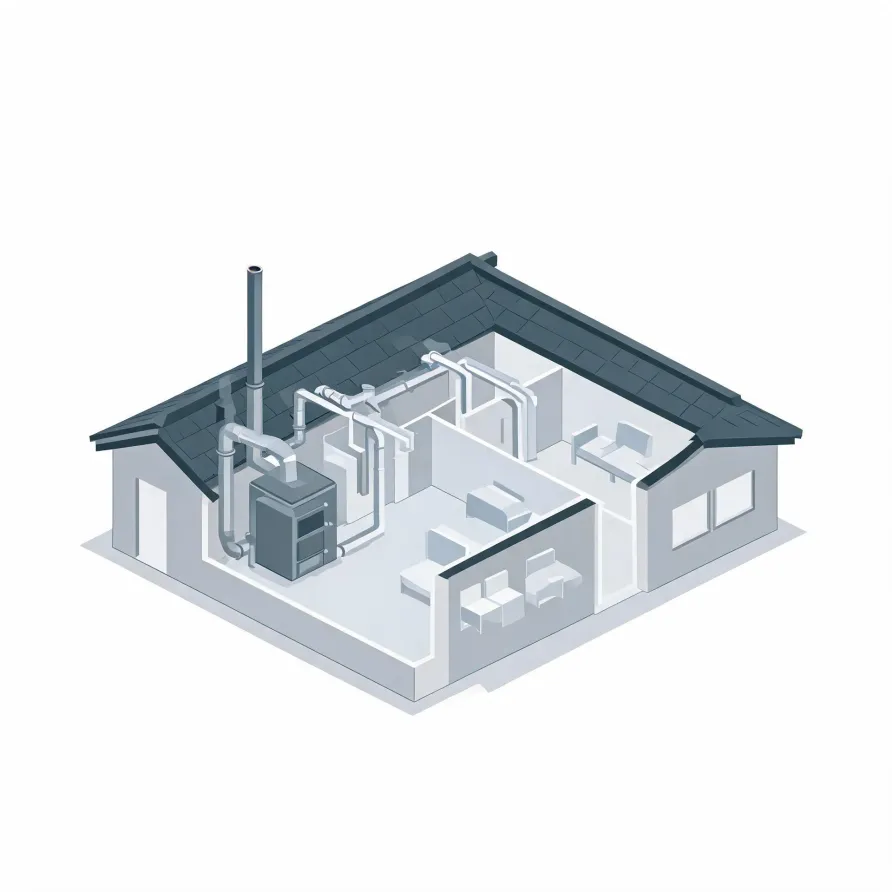
The furnace itself sits in a mechanical room, basement, or utility closet and is the unit a homeowner is most likely to recognize on sight. A contractor sets the cabinet in place, connects it to the gas supply line, and runs the flue pipe up through or out of the house to vent combustion gases outside.
The air handler components built into or paired with the furnace include the blower, the heat exchanger, and the filter housing, all of which sit within the cabinet. The thermostat mounts on an interior wall and is the control point that tells the furnace when to fire and when to stop.
The drawing shows a typical layout, and a licensed contractor determines what the configuration looks like in your specific home.
Find a contractor in Lenoir CountyLenoir County by the numbers
61 severe weather events were recorded in Lenoir County, North Carolina between 2015 and 2024.
NOAA National Centers for Environmental Information, Storm Events Database, bulk CSV export, events 2015-01-01 through 2024-12-31.Half the homes in Lenoir County, North Carolina were built in 1978 or earlier (2020-2024 ACS 5-year).
U.S. Census Bureau, 2020-2024 American Community Survey 5-Year EstimatesLenoir County, North Carolina holds 26,879 housing units (2020-2024 ACS 5-year).
U.S. Census Bureau, 2020-2024 American Community Survey 5-Year EstimatesOwners occupy 59.2% of the occupied homes in Lenoir County, North Carolina (2020-2024 ACS 5-year).
U.S. Census Bureau, 2020-2024 American Community Survey 5-Year EstimatesCodes & Standards Governing Furnace Installation in Lenoir County, North Carolina6 sourced rules and standards
What the Installation Looks Like
Non-weatherized gas furnaces manufactured on or after November 19, 2015 must reach 80.0 percent AFUE.
Non-weatherized oil-fired furnaces manufactured on or after November 19, 2015 must reach 83.0 percent AFUE.
Mobile home gas furnaces manufactured on or after November 19, 2015 must reach 80.0 percent AFUE.
Non-weatherized gas furnaces manufactured on or after December 18, 2028 must reach 95.0 percent AFUE, up from the 80.0 percent minimum that applies to units manufactured before that date.
Licensing Rules for HVAC Work in Lenoir County, North Carolina
North Carolina issues Class I heating licenses covering all systems in all structures, and Class II licenses covering heating systems in single-family detached residential dwellings.
North Carolina requires a license before any person or firm may engage in, or offer to engage in, the business of heating contracting.
Severe Weather Events in Lenoir County
Weather puts direct stress on heating and cooling equipment, and how hard a furnace works over its life is shaped by local conditions. That makes the pattern of severe weather in this area a practical factor in sizing and installing equipment that holds up.
61 severe weather events, 2015–2024. Source: NOAA National Centers for Environmental Information, Storm Events Database.