Tell us about the job
Takes about a minute. No obligation.
A furnace repair call in Washington County starts with what the equipment has been asked to do over its life, not with what the sky has thrown at it. 50 severe weather events were recorded in Washington County, North Carolina between 2015 and 2024. At that rate, severe weather is an occasional event here, not a standing condition, so a contractor pulling apart a failed heat exchanger or a failing ignitor is looking at installation quality, filter history, and the age of the components first. Those are what drive repair scopes in a county like this. Climate load sits in the background.
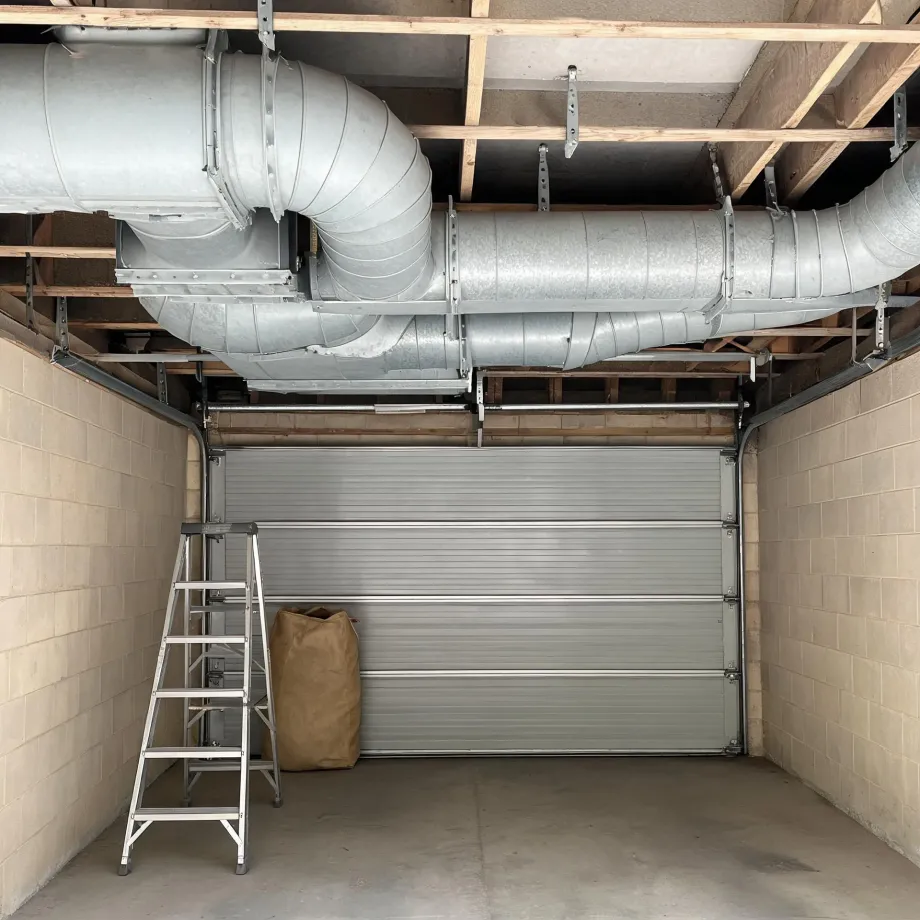
Older ductwork and wiring tell their own story, but on a furnace repair job the variable that reshapes the bill is usually what the opened unit turns out to need and whether those parts are still being made. Half the homes in Washington County, North Carolina were built in 1975 or earlier (2020-2024 ACS 5-year). A furnace installed into housing built that long ago has gone through at least one replacement cycle, and whatever is running now is drawing on a parts supply that shrinks every year a model ages. A contractor who finds a failed heat exchanger or a cracked inducer housing has to check availability before the repair scope is real.
The Parts of a Furnace a Contractor Checks First
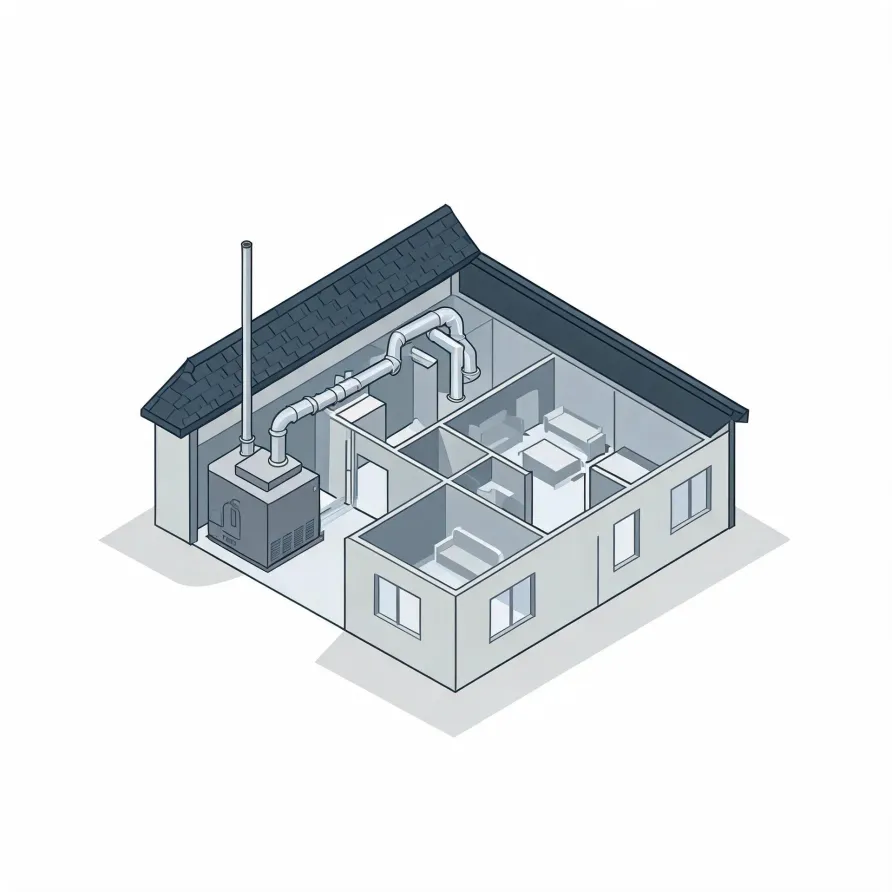
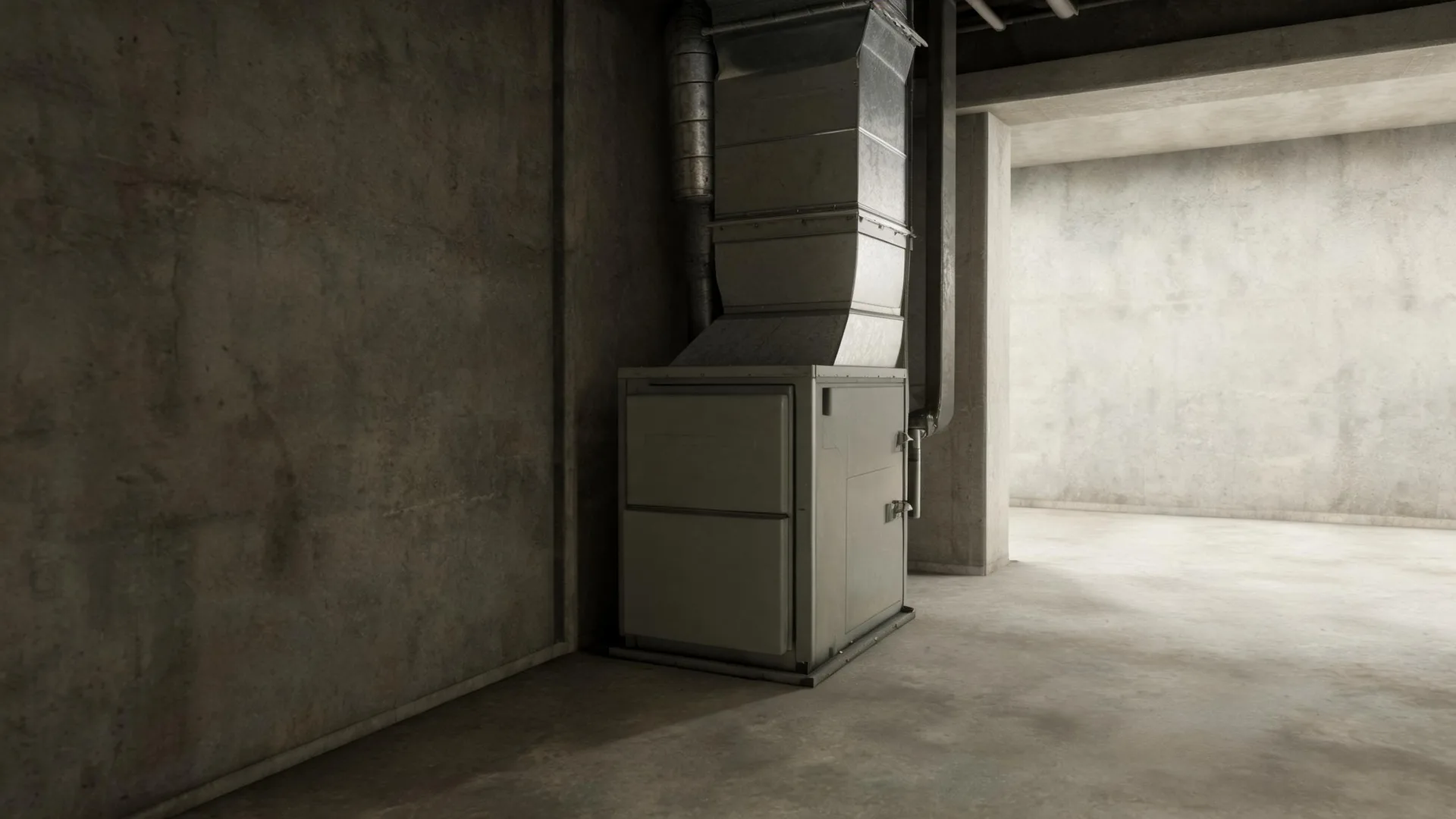
The furnace itself sits in a utility space, basement, or closet and is the piece a contractor goes to first. Inside it, the heat exchanger is the part that warms the air passing through, and a crack or failure there is what makes a furnace stop doing its job or become unsafe. The burners, which fire inside the heat exchanger, and the igniter, which lights them, are the other components a contractor examines early.
The blower motor and fan sit within the furnace cabinet and push conditioned air out into the home. The flue pipe runs from the furnace to an exterior wall or roofline and carries combustion gases out of the house. A failed blower or a blocked flue are among the first things a contractor rules out when a furnace runs poorly or not at all.
The drawing shows a general layout of the system, and a licensed contractor determines what applies to the specific equipment and configuration in your house.
Find a contractor in Washington CountyWashington County, NC, by the numbers
50 severe weather events were recorded in Washington County, North Carolina between 2015 and 2024.
NOAA National Centers for Environmental Information, Storm Events Database, bulk CSV export, events 2015-01-01 through 2024-12-31.Half the homes in Washington County, North Carolina were built in 1975 or earlier (2020-2024 ACS 5-year).
U.S. Census Bureau, 2020-2024 American Community Survey 5-Year EstimatesWashington County, North Carolina holds 6,040 housing units (2020-2024 ACS 5-year).
U.S. Census Bureau, 2020-2024 American Community Survey 5-Year EstimatesOwners occupy 68.0% of the occupied homes in Washington County, North Carolina (2020-2024 ACS 5-year).
U.S. Census Bureau, 2020-2024 American Community Survey 5-Year EstimatesCodes & Standards Governing Furnace Repair in Washington County, North Carolina6 sourced rules and standards
What Happens When a Contractor Comes Out
Non-weatherized gas furnaces manufactured on or after November 19, 2015 must reach 80.0 percent AFUE.
Non-weatherized oil-fired furnaces manufactured on or after November 19, 2015 must reach 83.0 percent AFUE.
Mobile home gas furnaces manufactured on or after November 19, 2015 must reach 80.0 percent AFUE.
Non-weatherized gas furnaces manufactured on or after December 18, 2028 must reach 95.0 percent AFUE, up from the 80.0 percent minimum that applies to units manufactured before that date.
Licensing Rules for HVAC Work in Washington County, North Carolina
North Carolina issues Class I heating licenses covering all systems in all structures, and Class II licenses covering heating systems in single-family detached residential dwellings.
North Carolina requires a license before any person or firm may engage in, or offer to engage in, the business of heating contracting.
Severe Weather Events in Washington County
Weather puts a load on heating equipment that routine use does not. A furnace that cycles hard through storm seasons and temperature swings wears differently than one in mild conditions, and knowing that pattern is part of understanding what repair work in Washington County actually involves.
50 severe weather events, 2015–2024. Source: NOAA National Centers for Environmental Information, Storm Events Database.