Tell us about the job
Takes about a minute. No obligation.
A furnace contractor working a repair in Pasquotank County has to establish what the system has actually been carrying before settling on a cause. 43 severe weather events were recorded in Pasquotank County, North Carolina between 2015 and 2024. At that rate, severe weather is a standing condition of operating here, and its effects accumulate in the parts that absorb the hardest cycling: heat exchangers, ignitors, and the blower components that work hardest when temperatures swing. A failure that looks like age at first may be age compounded by load, and separating the two changes what gets replaced and what gets left alone.
Furnace components wear on their own schedule, but whether a failed part can be sourced is a question the age of the local housing stock shapes directly. Half the homes in Pasquotank County, North Carolina were built in 1988 or earlier (2020-2024 ACS 5-year). A system installed to serve a house that old has gone through at least one equipment cycle, and the furnace a contractor opens today may be drawing on a parts supply that manufacturers have already begun to thin out. That is the detail that changes a repair quote here: the labor and the diagnosis are straightforward, but availability of the heat exchanger, the inducer motor, or the limit switch determines whether the job stays a repair or becomes a replacement conversation.
The Parts of a Furnace a Contractor Checks First
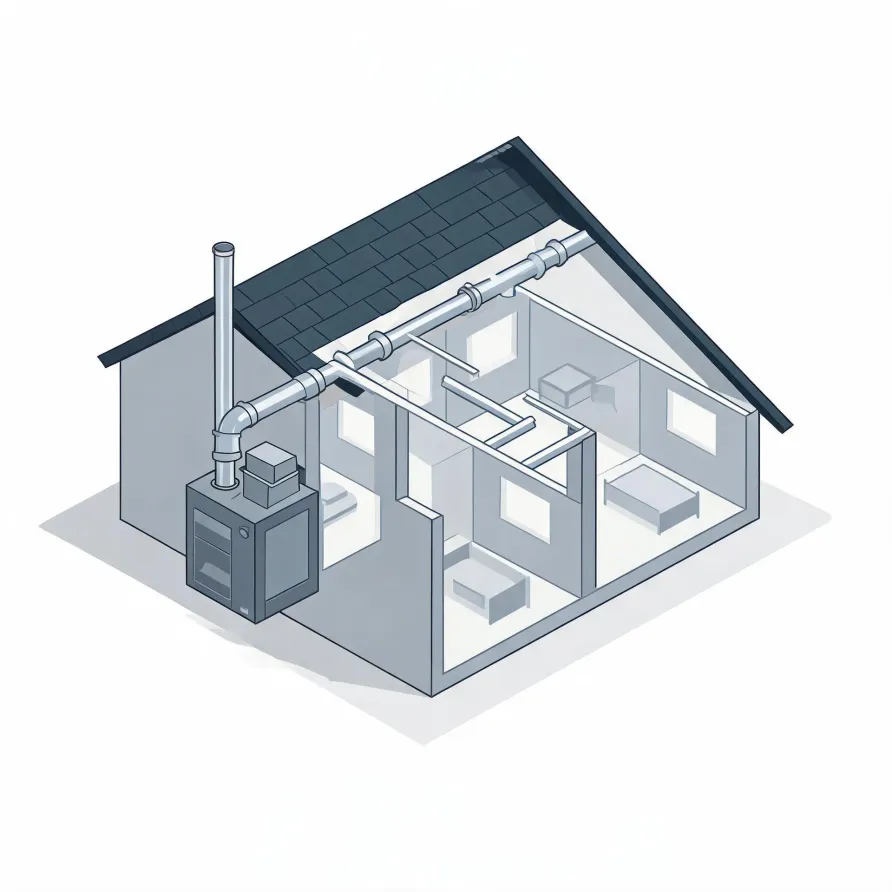
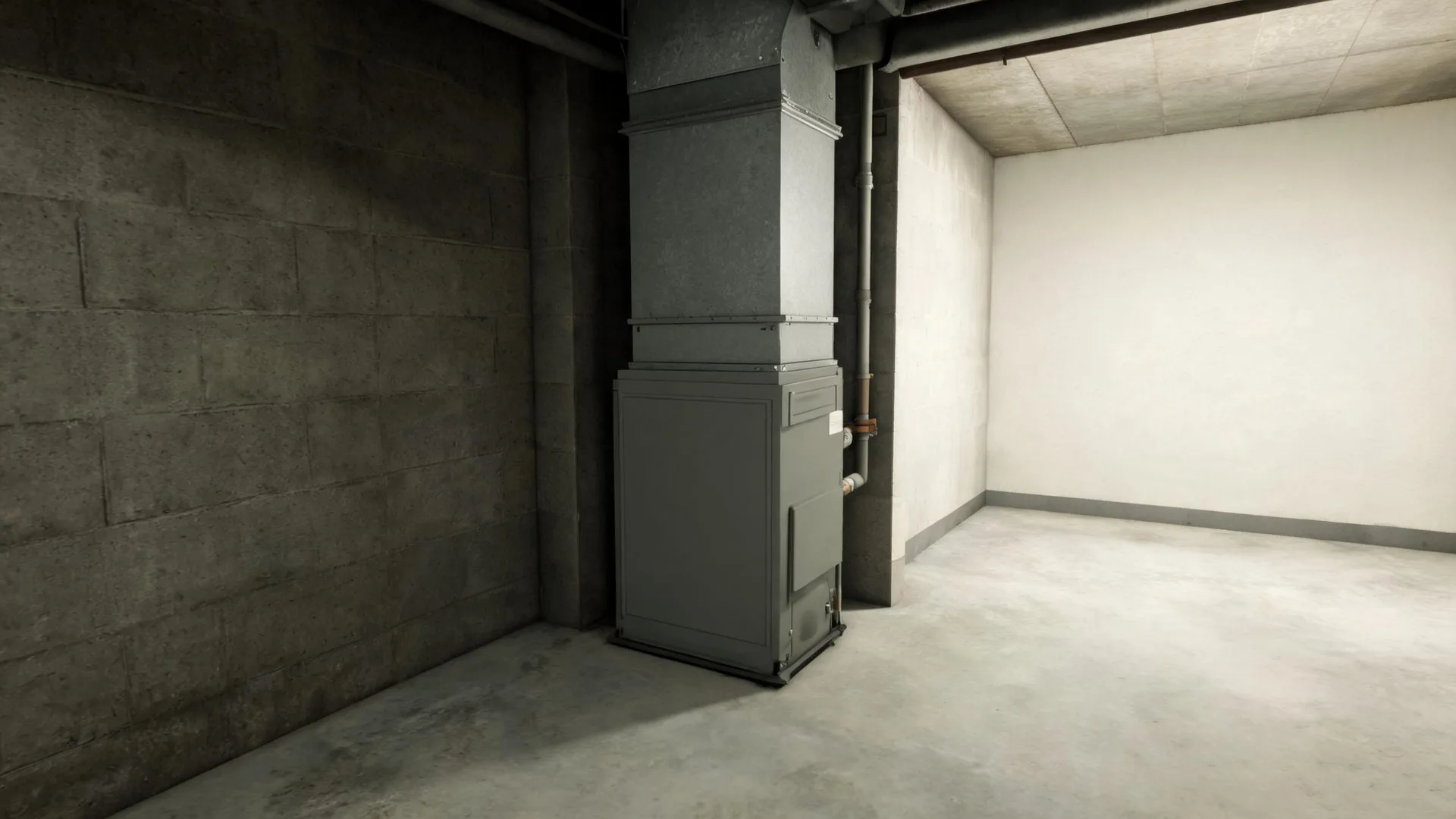
The furnace cabinet sits in a basement, utility closet, or crawl space and houses the burner assembly, heat exchanger, and blower. The burner is where combustion happens, so a contractor checks it early when the system produces no heat or uneven heat. A cracked heat exchanger is a safety concern that shows up in the same inspection.
The draft inducer pulls combustion gases out through the flue, and the igniter lights the burner on each cycle. Both are common fault points when a furnace starts and stops short or fails to light at all. The limit switch and control board sit inside the cabinet as well, reading temperatures and telling the other parts when to run.
The drawing shows a typical furnace layout, and a licensed contractor determines which parts apply to the specific equipment and installation in your home.
Find a contractor in Pasquotank CountyPasquotank County by the Numbers
43 severe weather events were recorded in Pasquotank County, North Carolina between 2015 and 2024.
NOAA National Centers for Environmental Information, Storm Events Database, bulk CSV export, events 2015-01-01 through 2024-12-31.Half the homes in Pasquotank County, North Carolina were built in 1988 or earlier (2020-2024 ACS 5-year).
U.S. Census Bureau, 2020-2024 American Community Survey 5-Year EstimatesPasquotank County, North Carolina holds 17,721 housing units (2020-2024 ACS 5-year).
U.S. Census Bureau, 2020-2024 American Community Survey 5-Year EstimatesOwners occupy 67.5% of the occupied homes in Pasquotank County, North Carolina (2020-2024 ACS 5-year).
U.S. Census Bureau, 2020-2024 American Community Survey 5-Year EstimatesCodes & Standards Governing Furnace Repair in Pasquotank County, North Carolina6 sourced rules and standards
What happens when a contractor comes out to your home
Non-weatherized gas furnaces manufactured on or after November 19, 2015 must reach 80.0 percent AFUE.
Non-weatherized oil-fired furnaces manufactured on or after November 19, 2015 must reach 83.0 percent AFUE.
Mobile home gas furnaces manufactured on or after November 19, 2015 must reach 80.0 percent AFUE.
Non-weatherized gas furnaces manufactured on or after December 18, 2028 must reach 95.0 percent AFUE, up from the 80.0 percent minimum that applies to units manufactured before that date.
Licensing Rules for HVAC Work in Pasquotank County, North Carolina
North Carolina issues Class I heating licenses covering all systems in all structures, and Class II licenses covering heating systems in single-family detached residential dwellings.
North Carolina requires a license before any person or firm may engage in, or offer to engage in, the business of heating contracting.
Severe Weather Events in Pasquotank County
Extreme weather puts real strain on furnace components, from heat exchangers to ignition systems, and the pattern of that strain is local. What happens in Pasquotank County shapes how hard the equipment works and how often it needs attention.
43 severe weather events, 2015–2024. Source: NOAA National Centers for Environmental Information, Storm Events Database.