Tell us about the job
Takes about a minute. No obligation.
A furnace repair in this area starts with what the equipment has been running against. 209 severe weather events were recorded in Rockingham County, North Carolina between 2015 and 2024. At that rate, severe weather is a standing condition of operation here, not an occasional interruption, and a contractor diagnosing a failed heat exchanger, a worn inducer motor, or a cracked pressure switch is looking at components that have been cycled hard through repeated weather stress. Age alone does not explain the pattern of failures a contractor finds in this county. The weather load does.
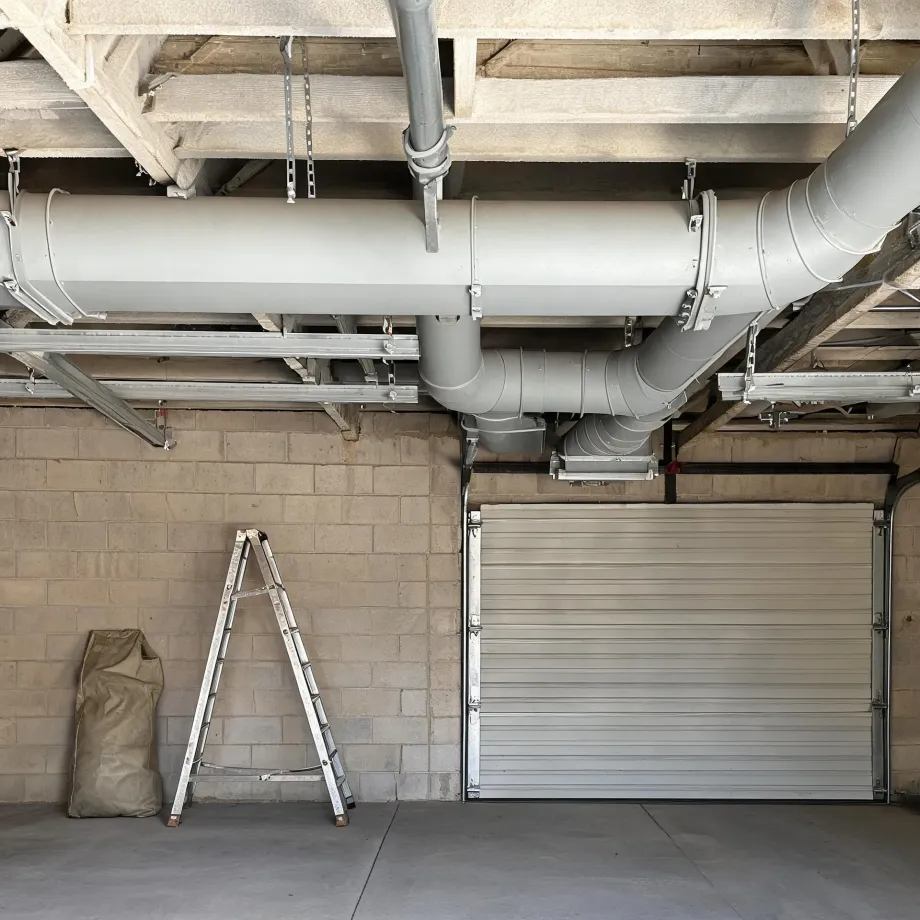
Older ductwork and decades of heating cycles leave their marks in specific places. Half the homes in Rockingham County, North Carolina were built in 1978 or earlier (2020-2024 ACS 5-year). A furnace that has run through that many winters is more likely to show a cracked heat exchanger or a deteriorating flue section than a failed circuit board, and a contractor opening one of these units checks the combustion side first for that reason. Parts for systems this old can also be scarce, which shapes how a contractor prices and sequences the job before any component gets ordered.
The Parts of a Furnace a Contractor Checks First
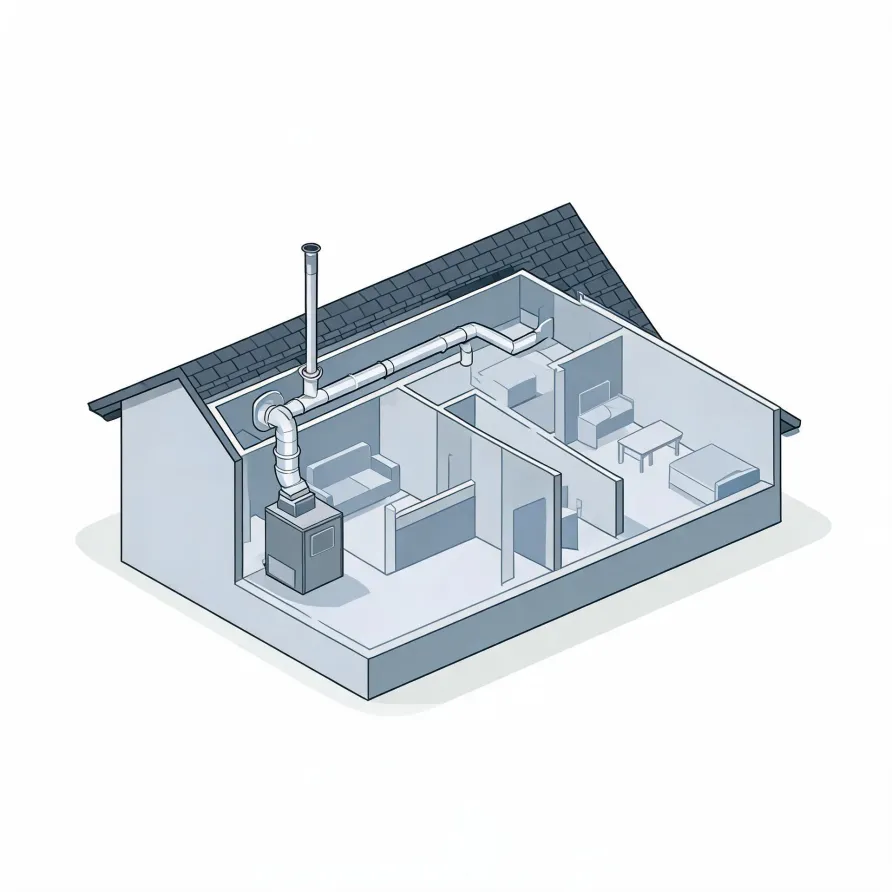
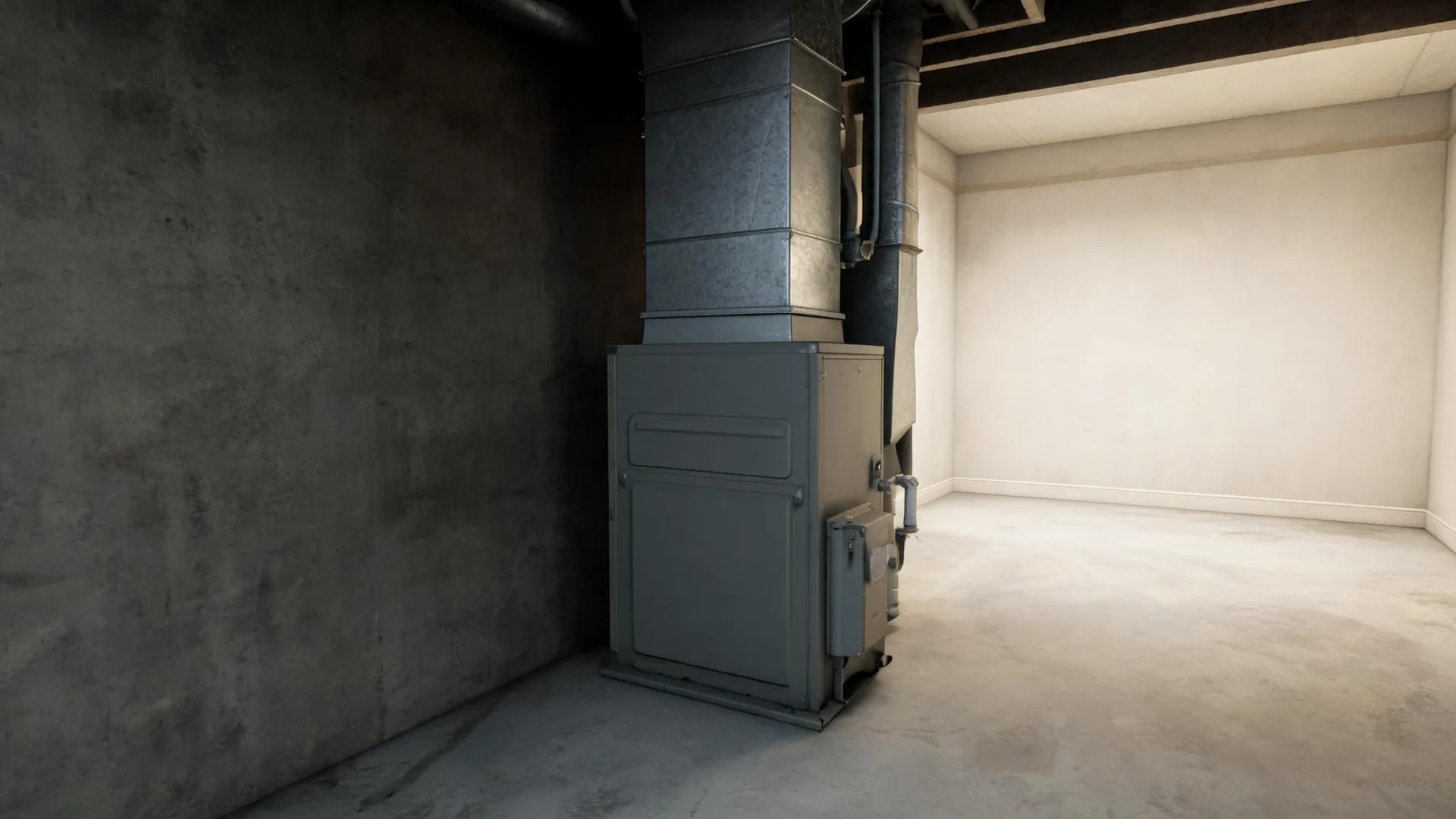
The furnace itself sits in a basement, utility closet, or crawlspace and is where a contractor starts. Inside it, the heat exchanger is the piece most worth understanding: cracks or corrosion there affect both heating and safety. The burners, which fire inside that exchanger, are another early stop when a furnace is misfiring or failing to ignite.
The blower motor sits at the base of the furnace cabinet and pushes conditioned air out through the house. Alongside it, the control board reads signals from the thermostat and tells every other component when to act, making it a common point of investigation when symptoms are hard to pin to a single part.
The drawing shows a typical furnace layout, and a licensed contractor determines which components apply to your specific system and what work each one actually needs.
Find a contractor in Rockingham CountyRockingham County, by the numbers
209 severe weather events were recorded in Rockingham County, North Carolina between 2015 and 2024.
NOAA National Centers for Environmental Information, Storm Events Database, bulk CSV export, events 2015-01-01 through 2024-12-31.Half the homes in Rockingham County, North Carolina were built in 1978 or earlier (2020-2024 ACS 5-year).
U.S. Census Bureau, 2020-2024 American Community Survey 5-Year EstimatesRockingham County, North Carolina holds 43,868 housing units (2020-2024 ACS 5-year).
U.S. Census Bureau, 2020-2024 American Community Survey 5-Year EstimatesOwners occupy 72.1% of the occupied homes in Rockingham County, North Carolina (2020-2024 ACS 5-year).
U.S. Census Bureau, 2020-2024 American Community Survey 5-Year EstimatesFurnace Repair Rules on the Books for Rockingham County, North Carolina6 codes, standards & laws
What Repair Work Looks Like in Rockingham County
Non-weatherized gas furnaces manufactured on or after November 19, 2015 must reach 80.0 percent AFUE.
Non-weatherized oil-fired furnaces manufactured on or after November 19, 2015 must reach 83.0 percent AFUE.
Mobile home gas furnaces manufactured on or after November 19, 2015 must reach 80.0 percent AFUE.
Non-weatherized gas furnaces manufactured on or after December 18, 2028 must reach 95.0 percent AFUE, up from the 80.0 percent minimum that applies to units manufactured before that date.
Licensing and Legal Requirements in Rockingham County, North Carolina
North Carolina issues Class I heating licenses covering all systems in all structures, and Class II licenses covering heating systems in single-family detached residential dwellings.
North Carolina requires a license before any person or firm may engage in, or offer to engage in, the business of heating contracting.
Severe Weather Events in Rockingham County
Rockingham County weather puts real demand on furnaces, from hard freezes that run equipment for days straight to sudden swings that stress components not designed for extremes. How often that pressure arrives shapes how much repair work local furnaces need.
209 severe weather events, 2015–2024. Source: NOAA National Centers for Environmental Information, Storm Events Database.