Tell us about the job
Takes about a minute. No obligation.
A furnace installation in Halifax County starts with what the equipment will actually face here, not what a catalog spec assumes. 107 severe weather events were recorded in Halifax County, North Carolina between 2015 and 2024. At that rate, severe weather is a standing condition of operation, not an occasional interruption, and a contractor who ignores it risks undersizing the unit or skipping details in the install that would otherwise hold up under strain. Duct sealing, equipment placement, and system capacity all get specified against what this area demands.
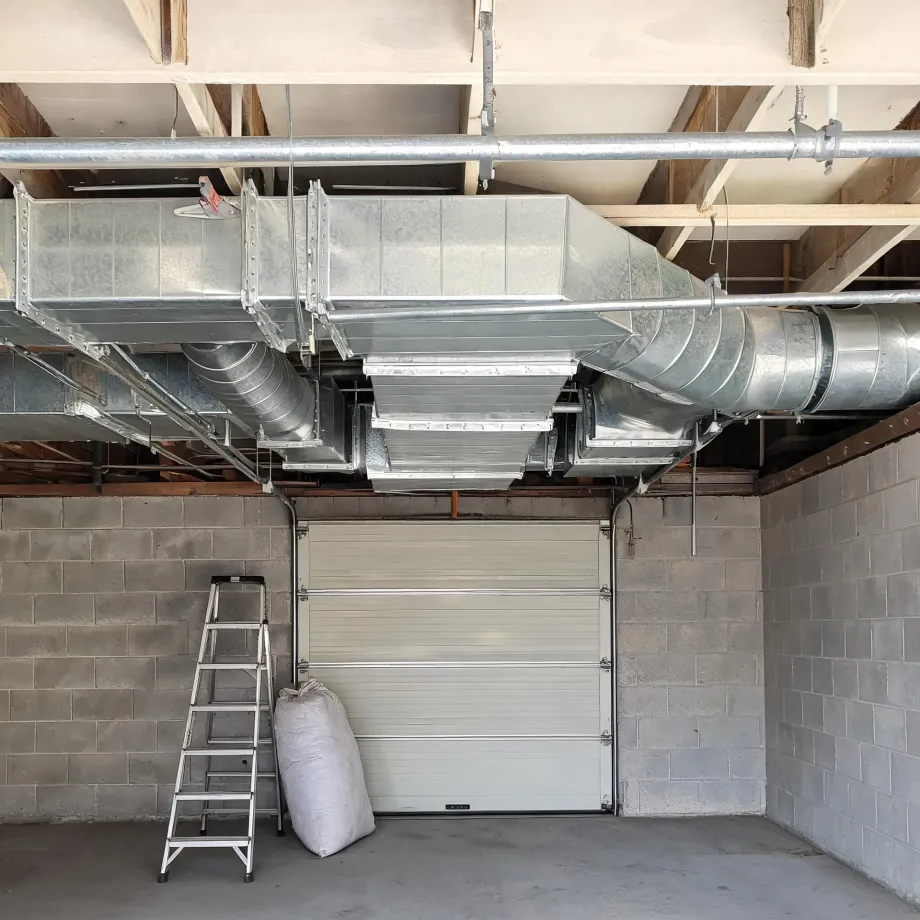
Ductwork laid in for heating systems of an earlier generation was designed around different airflow volumes and supply layouts than a modern furnace requires. Half the homes in Halifax County, North Carolina were built in 1979 or earlier (2020-2024 ACS 5-year). A contractor quoting a furnace installation here has to assess whether existing ducts can carry the new system's output, and whether the home's electrical service meets what the unit draws, before any equipment decision makes sense. Houses where the ductwork cannot handle the load need remediation that changes the scope and the bill.
What Gets Installed With a New Furnace
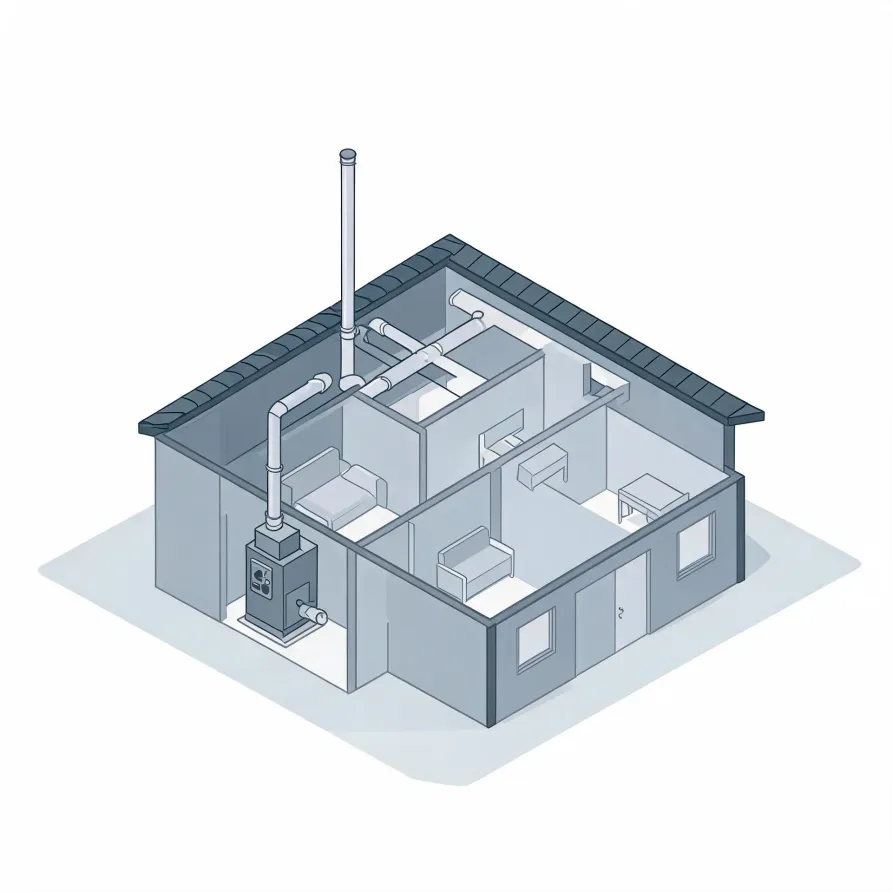
The furnace itself sits in a utility room, basement, or crawl space and is the unit a homeowner will recognize on sight. Inside it, a heat exchanger and a burner assembly do the core work of producing heat, while a blower motor pushes conditioned air out into the house.
A flue pipe runs from the furnace to an exterior vent, carrying combustion gases out of the home. Alongside the furnace, a thermostat mounts on an interior wall and serves as the control point where temperature settings are set and the system is signaled to run.
The drawing shows a typical layout, and a licensed contractor determines exactly what applies to this particular house.
Find a contractor in Halifax CountyHalifax County, by the numbers
107 severe weather events were recorded in Halifax County, North Carolina between 2015 and 2024.
NOAA National Centers for Environmental Information, Storm Events Database, bulk CSV export, events 2015-01-01 through 2024-12-31.Half the homes in Halifax County, North Carolina were built in 1979 or earlier (2020-2024 ACS 5-year).
U.S. Census Bureau, 2020-2024 American Community Survey 5-Year EstimatesHalifax County, North Carolina holds 24,872 housing units (2020-2024 ACS 5-year).
U.S. Census Bureau, 2020-2024 American Community Survey 5-Year EstimatesOwners occupy 62.9% of the occupied homes in Halifax County, North Carolina (2020-2024 ACS 5-year).
U.S. Census Bureau, 2020-2024 American Community Survey 5-Year EstimatesCodes & Standards Covering Furnace Installation in Halifax County, North Carolina6 sourced rules and standards
What HVAC Installation Looks Like in Halifax County
Non-weatherized gas furnaces manufactured on or after November 19, 2015 must reach 80.0 percent AFUE.
Non-weatherized oil-fired furnaces manufactured on or after November 19, 2015 must reach 83.0 percent AFUE.
Mobile home gas furnaces manufactured on or after November 19, 2015 must reach 80.0 percent AFUE.
Non-weatherized gas furnaces manufactured on or after December 18, 2028 must reach 95.0 percent AFUE, up from the 80.0 percent minimum that applies to units manufactured before that date.
Licensing and Legal Requirements in Halifax County, North Carolina
North Carolina issues Class I heating licenses covering all systems in all structures, and Class II licenses covering heating systems in single-family detached residential dwellings.
North Carolina requires a license before any person or firm may engage in, or offer to engage in, the business of heating contracting.
Severe Weather Events in Halifax County
Weather puts real hours on heating equipment. Furnaces that carry heavier loads through harsh conditions wear differently than those that don't, and what qualifies as a heavy load is a local question.
107 severe weather events, 2015–2024. Source: NOAA National Centers for Environmental Information, Storm Events Database.