Tell us about the job
Takes about a minute. No obligation.
A furnace contractor quoting a job in Burke County has to treat the local weather record as part of the load calculation, not background noise. 203 severe weather events were recorded in Burke County, North Carolina between 2015 and 2024. At that rate, severe weather is a standing condition of every heating season, and a system that is undersized or loosely installed will feel it in the ductwork and the heat exchanger before long. Sizing to catalog defaults and ignoring what the climate actually demands produces a system that works until conditions press it, then fails early.
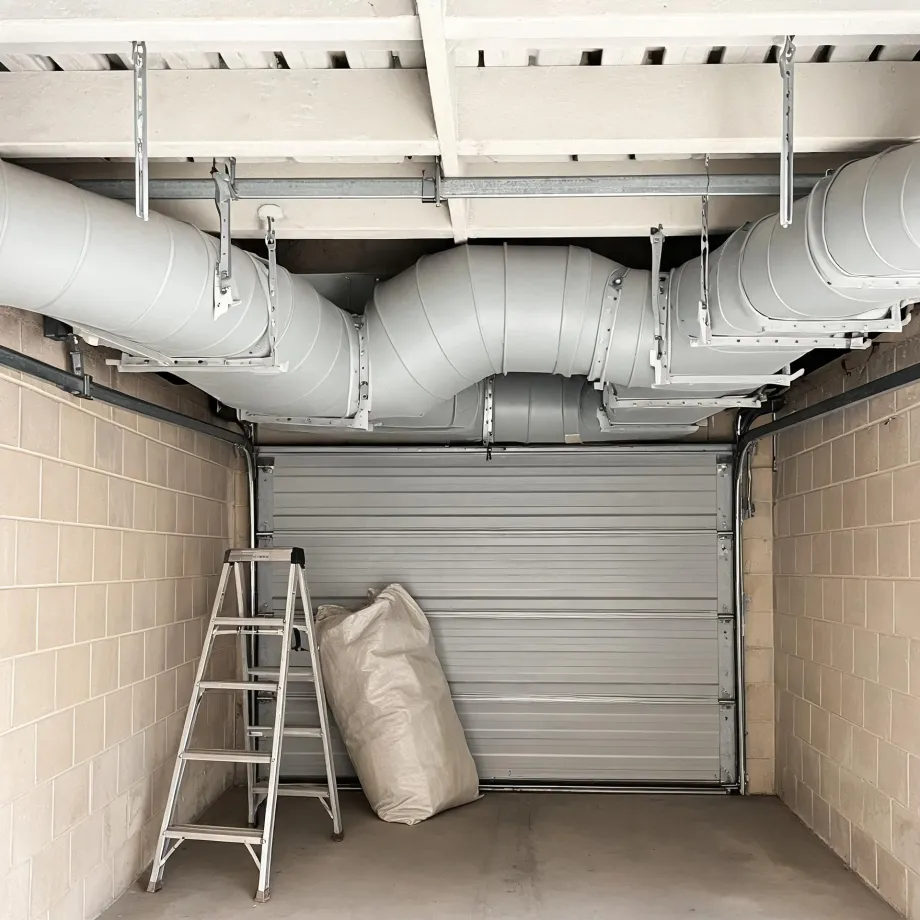
Ductwork put in for one generation of equipment and patched across several more is what a contractor opens the walls to find in a significant share of Burke County homes. Half the homes in Burke County, North Carolina were built in 1980 or earlier (2020-2024 ACS 5-year). That history matters for a furnace installation because a new unit's output depends on whether the existing duct system can carry it without pressure losses that undercut efficiency and comfort. The electrical side follows the same logic: service sized for older equipment draws a different load than a modern furnace with variable-speed components. A contractor who quotes the box before checking both is pricing the wrong thing.
What Gets Installed With a New Furnace
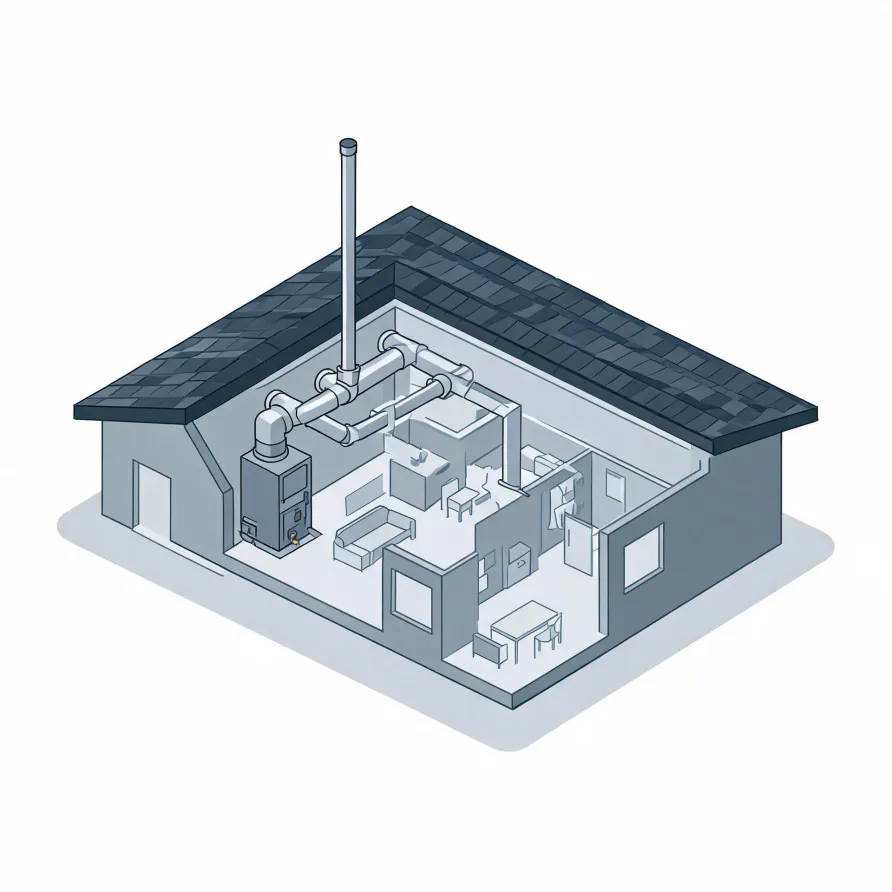
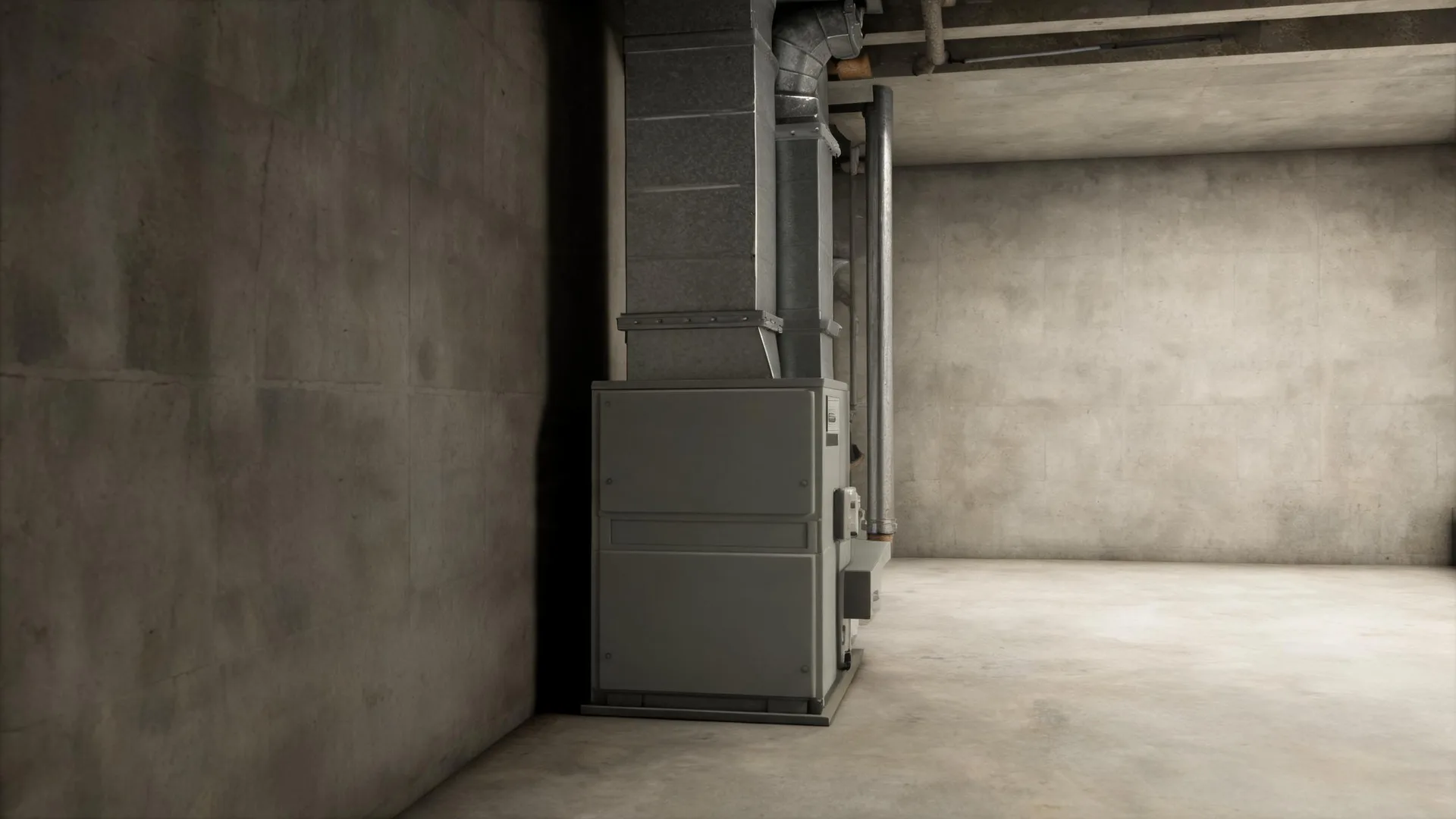
The furnace itself sits in a mechanical room, basement, or utility closet and is the piece that generates heat. A heat exchanger inside the cabinet warms the air that moves through the house, and a burner assembly feeds it fuel. The blower motor, housed in the same cabinet, pushes that warmed air out into the supply side of the duct system.
A flue pipe runs from the furnace up and out of the house, carrying combustion gases away from the living space. A gas valve and ignition assembly connect to the fuel supply line, and a thermostat on an interior wall serves as the control point that tells the whole system when to fire.
The drawing shows a typical layout, and a licensed contractor determines exactly which components apply to your home.
Find a contractor in Burke CountyBurke County, by the numbers
203 severe weather events were recorded in Burke County, North Carolina between 2015 and 2024.
NOAA National Centers for Environmental Information, Storm Events Database, bulk CSV export, events 2015-01-01 through 2024-12-31.Half the homes in Burke County, North Carolina were built in 1980 or earlier (2020-2024 ACS 5-year).
U.S. Census Bureau, 2020-2024 American Community Survey 5-Year EstimatesBurke County, North Carolina holds 40,358 housing units (2020-2024 ACS 5-year).
U.S. Census Bureau, 2020-2024 American Community Survey 5-Year EstimatesOwners occupy 74.5% of the occupied homes in Burke County, North Carolina (2020-2024 ACS 5-year).
U.S. Census Bureau, 2020-2024 American Community Survey 5-Year EstimatesFurnace Installation Rules for Burke County, North Carolina6 codes and standards
What Happens During a Furnace Installation in Burke County
Non-weatherized gas furnaces manufactured on or after November 19, 2015 must reach 80.0 percent AFUE.
Non-weatherized oil-fired furnaces manufactured on or after November 19, 2015 must reach 83.0 percent AFUE.
Mobile home gas furnaces manufactured on or after November 19, 2015 must reach 80.0 percent AFUE.
Non-weatherized gas furnaces manufactured on or after December 18, 2028 must reach 95.0 percent AFUE, up from the 80.0 percent minimum that applies to units manufactured before that date.
Licensing Rules for HVAC Work in Burke County, North Carolina
North Carolina issues Class I heating licenses covering all systems in all structures, and Class II licenses covering heating systems in single-family detached residential dwellings.
North Carolina requires a license before any person or firm may engage in, or offer to engage in, the business of heating contracting.
Severe Weather Events in Burke County
What the weather puts a furnace through shapes how it should be sized, installed, and built to last. Burke County's climate is local, and the equipment decisions that follow from it are too.
203 severe weather events, 2015–2024. Source: NOAA National Centers for Environmental Information, Storm Events Database.