Tell us about the job
Takes about a minute. No obligation.
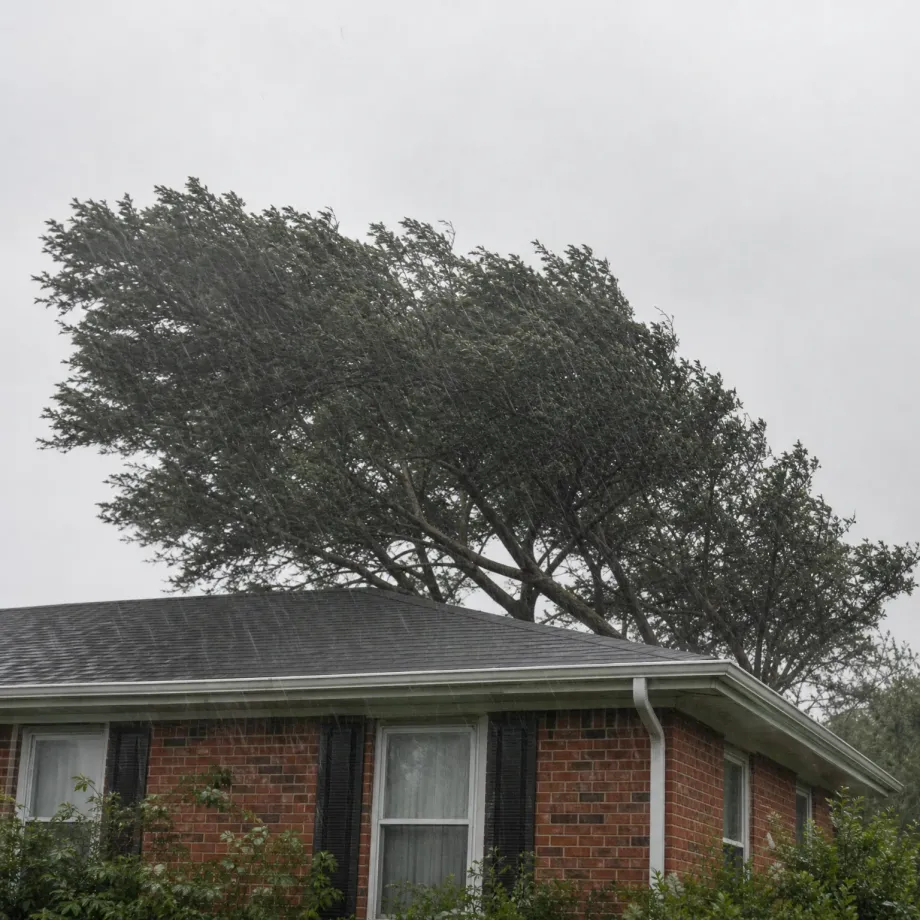
Sizing a furnace for a house in Iredell County starts with what the climate actually demands of the equipment. 146 severe weather events were recorded in Iredell County, North Carolina between 2015 and 2024. At that rate of severe weather, the thermal load a new furnace has to handle is a local question, and a contractor who treats it as a catalog lookup will land on the wrong unit. Too small and the system runs continuously without reaching set temperature on the worst nights. Properly sized, it carries the season without burning through its components ahead of schedule.
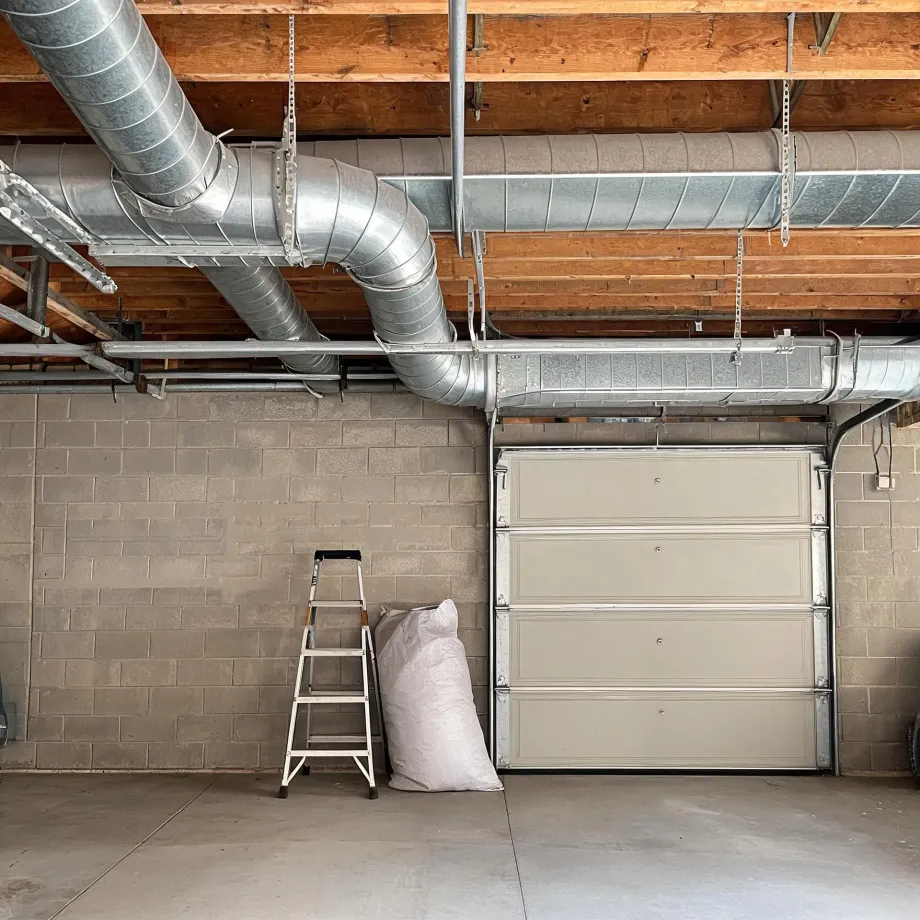
Ductwork laid out for an older system carries assumptions about airflow that a new furnace may not share. Half the homes in Iredell County, North Carolina were built in 1997 or earlier (2020-2024 ACS 5-year). A contractor sizing and placing a new furnace here has to assess whether the existing runs and returns will move air the way the new unit requires, before settling on equipment or pricing the job. If they do not, the furnace gets blamed for performance problems that belong to the distribution system.
What Gets Installed With a New Furnace
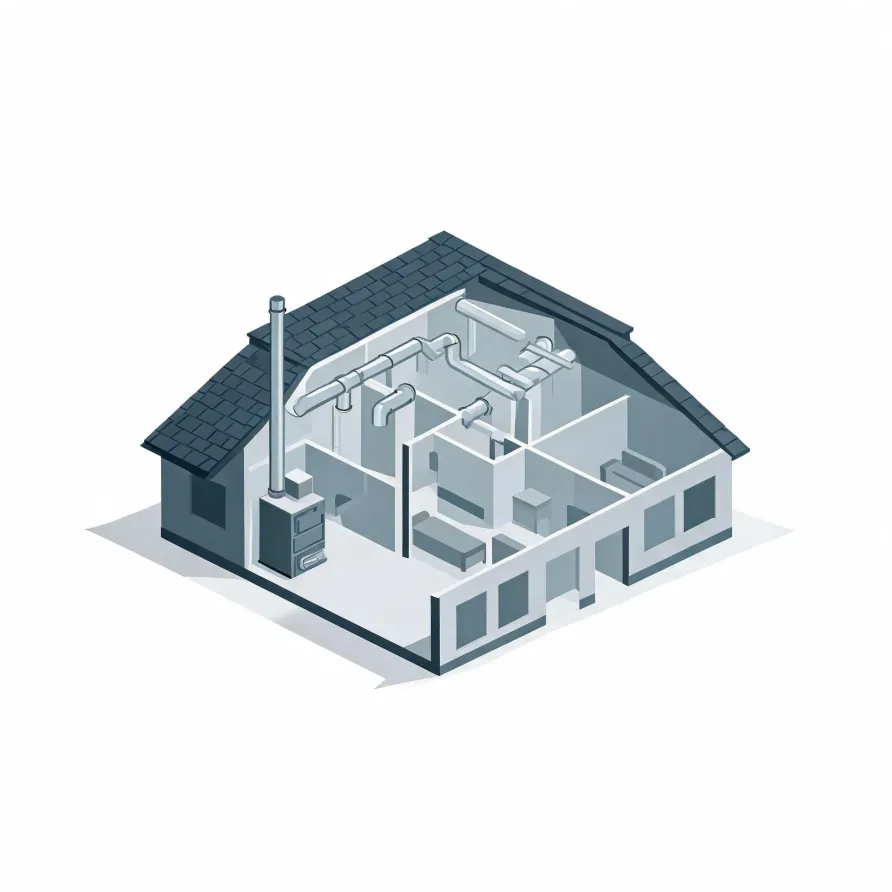
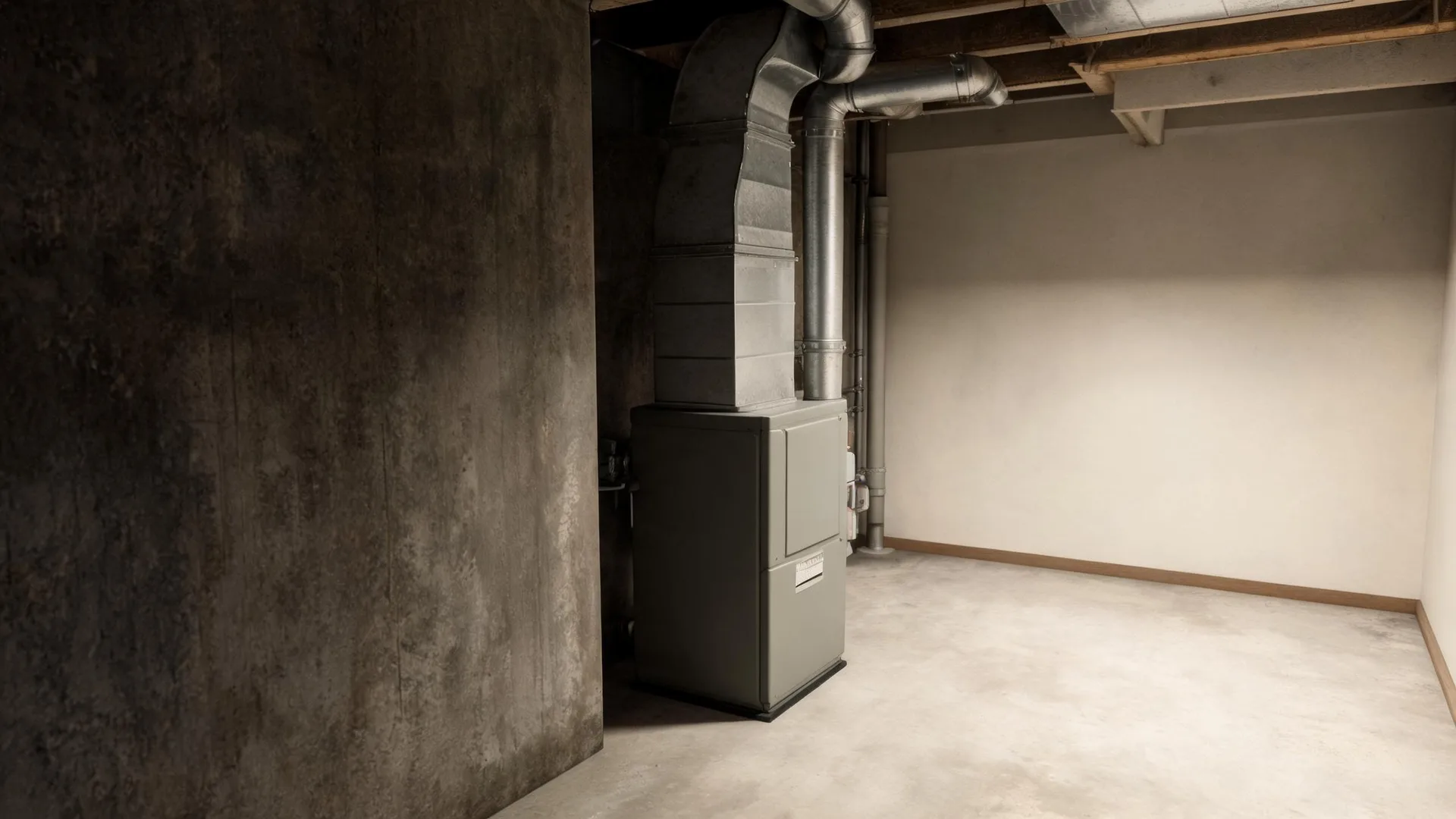
The furnace itself sits in a utility area, basement, or closet at the center of the system. Inside it, a burner assembly produces heat and a heat exchanger transfers that heat to the air passing through. A blower motor pushes the conditioned air out through the supply side of the house.
A flue or venting pipe runs from the furnace to an exterior wall or roof, carrying combustion gases out of the house. Alongside the furnace, a thermostat mounts on an interior wall and tells the system when to run. A filter housing, set at the return-air intake, holds the filter that screens the air before it reaches the blower.
The drawing shows a general layout of these components, and a licensed contractor determines what applies to the specific configuration of your home.
Find a contractor in Iredell CountyIredell County, by the numbers
146 severe weather events were recorded in Iredell County, North Carolina between 2015 and 2024.
NOAA National Centers for Environmental Information, Storm Events Database, bulk CSV export, events 2015-01-01 through 2024-12-31.Half the homes in Iredell County, North Carolina were built in 1997 or earlier (2020-2024 ACS 5-year).
U.S. Census Bureau, 2020-2024 American Community Survey 5-Year EstimatesIredell County, North Carolina holds 84,199 housing units (2020-2024 ACS 5-year).
U.S. Census Bureau, 2020-2024 American Community Survey 5-Year EstimatesOwners occupy 71.9% of the occupied homes in Iredell County, North Carolina (2020-2024 ACS 5-year).
U.S. Census Bureau, 2020-2024 American Community Survey 5-Year EstimatesCodes & Standards Governing Furnace Installation in Iredell County, North Carolina6 sourced rules and standards
What the Installation Actually Looks Like
Non-weatherized gas furnaces manufactured on or after November 19, 2015 must reach 80.0 percent AFUE.
Non-weatherized oil-fired furnaces manufactured on or after November 19, 2015 must reach 83.0 percent AFUE.
Mobile home gas furnaces manufactured on or after November 19, 2015 must reach 80.0 percent AFUE.
Non-weatherized gas furnaces manufactured on or after December 18, 2028 must reach 95.0 percent AFUE, up from the 80.0 percent minimum that applies to units manufactured before that date.
Licensing and Legal Requirements in Iredell County, North Carolina
North Carolina issues Class I heating licenses covering all systems in all structures, and Class II licenses covering heating systems in single-family detached residential dwellings.
North Carolina requires a license before any person or firm may engage in, or offer to engage in, the business of heating contracting.
Severe Weather Events in Iredell County
Weather puts real demands on heating equipment, and those demands vary by where you live. A furnace sized and installed for local conditions holds up better than one that was not.
146 severe weather events, 2015–2024. Source: NOAA National Centers for Environmental Information, Storm Events Database.